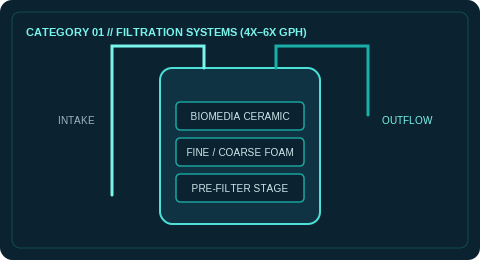
Aquarium Filters
Canister, hang-on-back (HOB), and sponge filtration systems analyzed by real turnover rate, media volume, and tank bioload.
Explore Filters
Practical buying guides and equipment comparisons for freshwater aquarium filters, heaters, lighting, and maintenance.
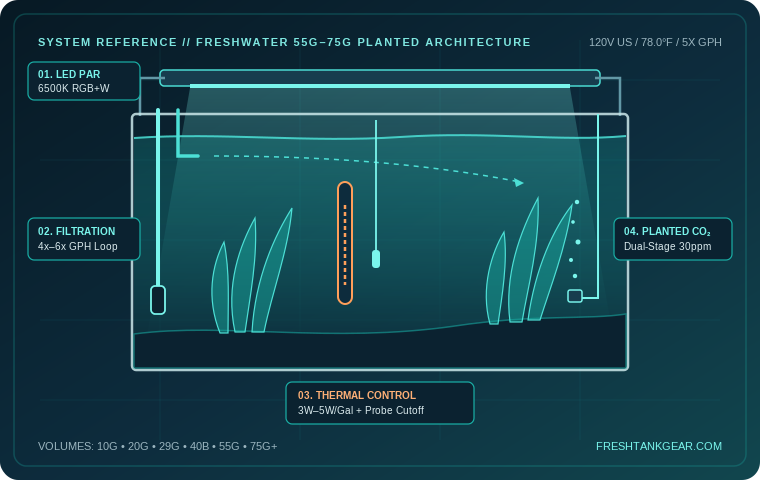
Structured technical hubs covering the five core hardware systems that keep freshwater community and planted aquariums stable.
Canister, hang-on-back (HOB), and sponge filtration systems analyzed by real turnover rate, media volume, and tank bioload.
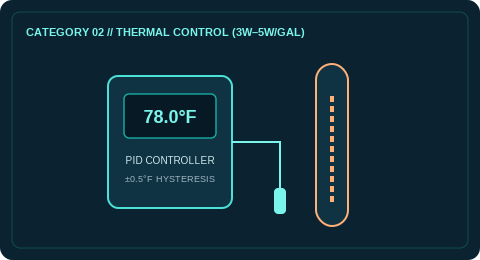
Submersible titanium, quartz glass, and inline heaters paired with external temperature controllers for stable tropical water.
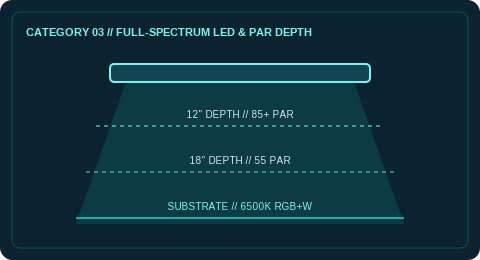
Full-spectrum freshwater LED fixtures evaluated by PAR distribution at substrate depth, spectrum control, and mounting span.
Dual-stage CO₂ regulators, inline diffusers, substrate systems, and specialized hardware for thriving planted aquascapes.
Faucet-driven water change systems, gravel vacuums, liquid test kits, and algae tools that streamline weekly tank care.
In-depth equipment comparisons and compatibility breakdowns loaded directly from our published editorial collection.
Learn how to pair an external aquarium heater controller like the Inkbird ITC-306T or ITC-306A with your freshwater heater, set differentials, and check load limits.
Compare the Aqueon Pro Adjustable and Fluval M Series freshwater aquarium heaters by temperature range, housing, installation length, and verified U.S. wattages.
Compare the Python No Spill Clean and Fill, Aqueon Aquarium Water Changer, and hygger HG966 faucet-connected water change kits by hose length and faucet adapters.
Compare the Seachem Tidal 75, Fluval 307 canister, and Fluval AC70 for a 55-gallon freshwater aquarium by flow rating, media access, and installation space.
Standard glass aquarium dimensions govern filter flow turnover, heater wattage, and LED fixture span. Use these engineering baselines when evaluating equipment specs.
| Tank Size | Standard Dimensions | Target Filter Flow | Heater Wattage | LED Span | Typical Setup Profile |
|---|---|---|---|---|---|
| 10 Gallon Standard | 20" L × 10" W × 12" H | 45 – 70 GPH | 50W | 18" – 20" | Beginner community, nano planted, Betta or shrimp setups |
| 20 Gallon High / Long | 24"×12"×16" (H) / 30"×12"×12" (L) | 90 – 130 GPH | 75W – 100W | 24" (High) / 30" (Long) | Versatile starter aquascapes, schooling tetras, Corydoras |
| 29 Gallon Standard | 30" L × 12" W × 18" H | 130 – 185 GPH | 100W – 150W | 30" | Tall-column community tanks, angelfish grow-out, mid-tech stems |
| 40 Gallon Breeder | 36" L × 18" W × 16" H | 180 – 260 GPH | 150W – 200W | 36" | Premier aquascaping footprint with wide 18" front-to-back depth |
| 55 Gallon Standard | 48" L × 13" W × 21" H | 250 – 350+ GPH | 200W (or Dual 100W–150W) | 48" (or Dual 24") | Classic 4-foot freshwater community, large HOB vs. canister crossover |
| 75 Gallon & Larger | 48" L × 18" W × 21" H | 350 – 500+ GPH | 300W (or Dual 150W + Controller) | 48" | High-volume canister filtration, dual-heater controller redundancy, Python water changes |
Every FreshTankGear buying guide is structured around verifiable technical criteria rather than vague marketing claims.
We audit published engineering datasheets, UL/ETL electrical ratings, physical dimensions, and replacement parts diagrams rather than relying on retailer marketing bullets.
Equipment ratings on packaging often overstate real-world capacity. We match hardware to standard US glass tank dimensions (10, 20, 29, 40 Breeder, 55, and 75+ gallon profiles).
A pump’s free-flowing GPH rating drops significantly once media trays are loaded. We evaluate internal basket volume, media configurability, and resistance to internal water bypass.
Heater evaluations prioritize thermal stability and failure protection, comparing internal electronic thermostats against external probe controllers and dual-element setups.
Freshwater lighting is evaluated by usable photosynthetic irradiance (PAR) at the substrate depth, diode channel configurability, and built-in sunrise/sunset ramp timers.
The best aquarium gear reduces weekly friction. We assess priming reliability, valve disconnect design, consumable cost over time, and documented long-term hobbyist failure modes.